

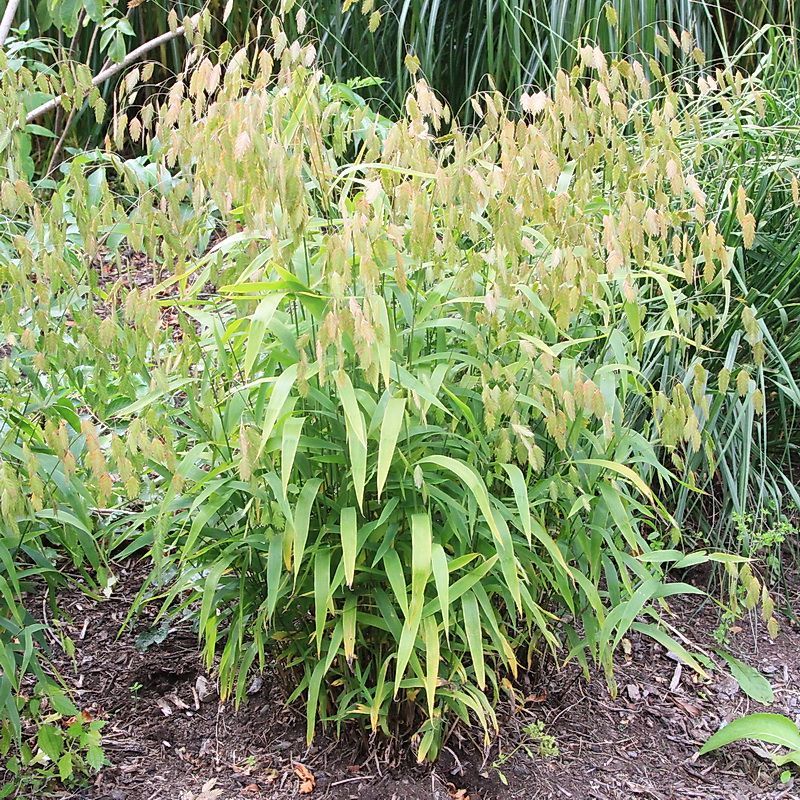
Chasmanthium latifolium
Indian woodoats, spikegrass
Poaceae (Gramineae)
Plant Specifics
Form:
Size:
Life Span:
short-lived perennial
Flower Color:
Fruit Color:
Phenology:
Noted For:
Landscaping
Recommended Uses:
Considerations:
It reseeds easily and can expand aggressively.
Light:
Moisture Tolerance:
Usually moist, occasional inundation ---- to ---- Not wet but not extremely dry
Salt Water Flooding Tolerance:
Unknown
Salt Spray/Salty Soil Tolerance:
Low/no tolerance of salty wind or direct salt spray
Soil or Other Substrate:
Sand, Loam
Suitable to Grow In:
Ecology
Wildlife:
Larval host for pepper and salt skipper ( Amblyscirtes hegon ), common roadside skipper ( Amblyscirtes vialis ), and Bell's roadside skipper ( Amblyscirtes belli ). Possible host for Carolina satyr ( Hermeuptychia sosybius ).
Birds and other wildlife consume seed.
Native Habitats:

