
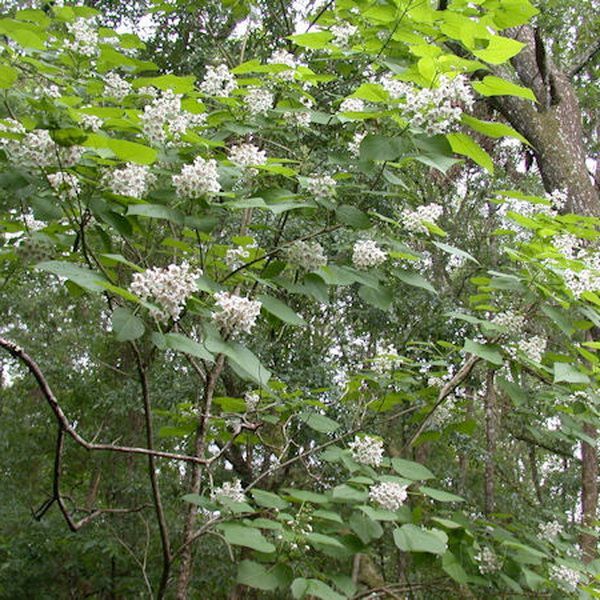
Catalpa bignonioides
catalpa
Bignoniaceae
Plant Specifics
Form:
tree
Size:
40-50 (70) ft tall by to 35 ft wide
Life Span:
long-lived perennial
Flower Color:
white
Fruit Color:
brown
Phenology:
deciduous
Noted For:
Showy Flowers, Interesting Foliage
Landscaping
Recommended Uses:
Specimen or shade tree.
Considerations:
The foul-smelling crushed leaves, flower litter, seed pod litter, and root suckers can create a maintenance problem in residential landscapes.
Light:
Full Sun, Part Sun
Moisture Tolerance:
Somewhat moist, no flooding ---- to ---- Somewhat long very dry periods
Salt Water Flooding Tolerance:
Unknown
Salt Spray/Salty Soil Tolerance:
Low/no tolerance of salty wind or direct salt spray
Soil or Other Substrate:
Sand, Loam
Suitable to Grow In:
8A,8B,9A,9B
Ecology
Wildlife:
Pollinators, Caterpillars
Larval host for catalpa sphinx moth ( Ceratomia catalpae ) and tersa sphinx ( Xylophanes tersa ).
Attracts various pollinators including butterflies and bees.
Native Habitats:
dry hammocks, dry hardwood forests.

