

Castanea pumila
Ashe's chinquapin, trailing chinquapin
Fagaceae
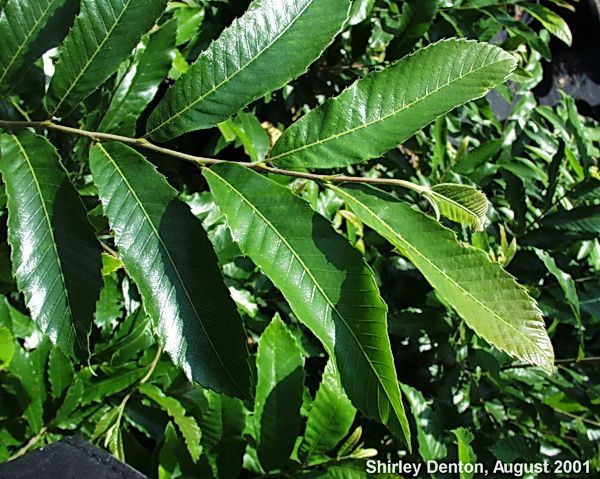
Plant Specifics
Form:
shrub
Size:
15-30 (40) ft tall by 15-20 (30) ft wide
Life Span:
long-lived perennial
Flower Color:
Fruit Color:
Phenology:
deciduous. Inconspicuous blooms in spring. Fruits ripen in fall. Life span <50 yrs.
Noted For:
Showy Flowers, Aroma/Showy Fruitsagrance, Fall Color, Interesting Foliage
Landscaping
Recommended Uses:
Natural settings as a small shade tree or large shrub.
Considerations:
Burr-covered nuts can cause a problem in residential landscapes.
Light:
Part Sun
Moisture Tolerance:
Not wet but not extremely dry ---- to ---- Very long very dry periods
Salt Water Flooding Tolerance:
Unknown
Salt Spray/Salty Soil Tolerance:
Low/no tolerance of salty wind or direct salt spray
Soil or Other Substrate:
Sand
Suitable to Grow In:
Ecology
Wildlife:
Mammals
Larval host for orange-tipped oakworm moth ( Anisota senatoria ) which can cause significant defoliation.
Nuts are consumed by birds and other wildlife.
Native Habitats:
Dry, open sandy woods, hammock edges, sandy roadsides, fence rows in sandy fields, dry bluffs, pine-oak-hickory woods, floodplains, calcareous river hammocks.

