
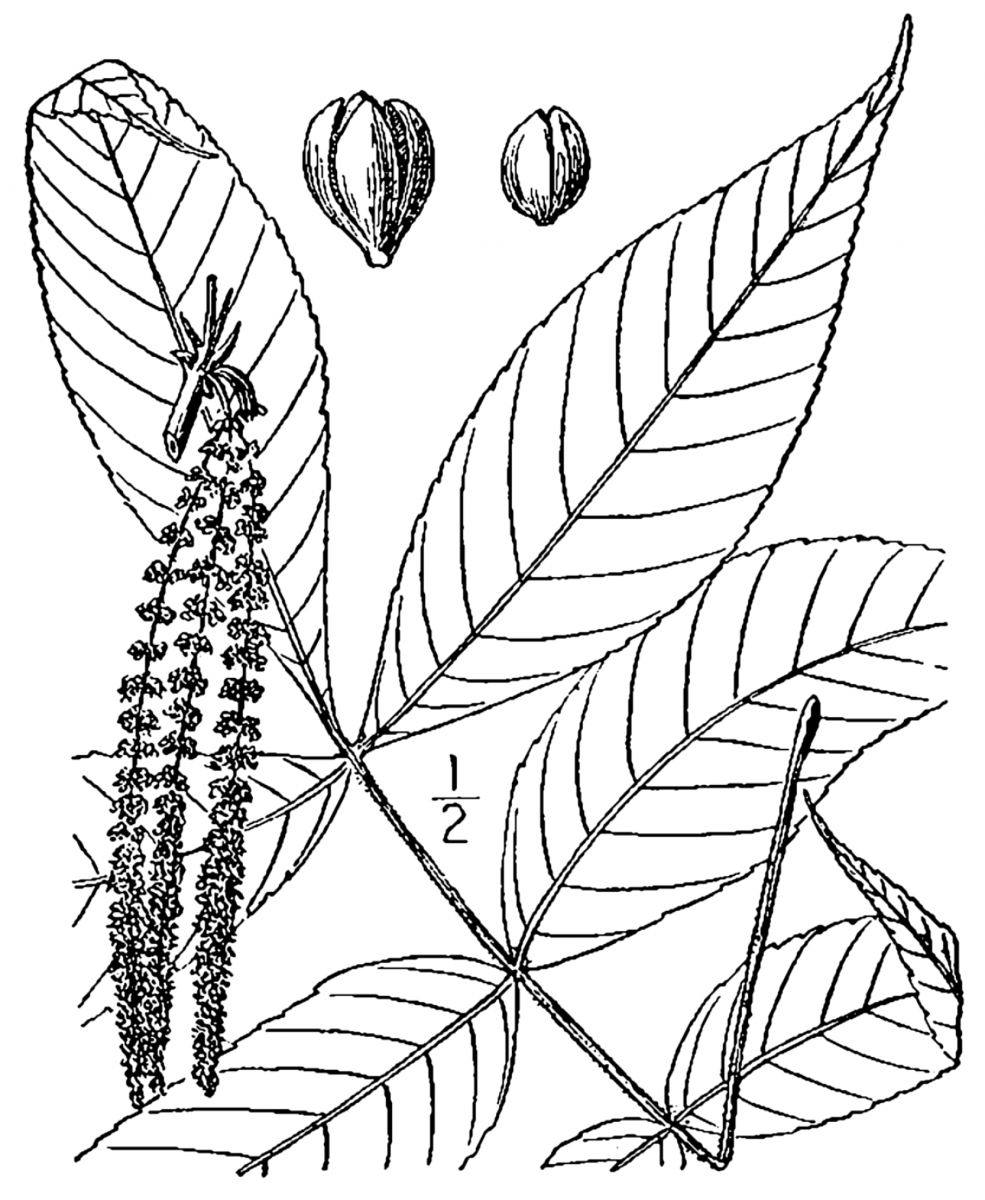
Carya pallida
sand hickory
Juglandaceae
Plant Specifics
Form:
Size:
Life Span:
long-lived perennial
Flower Color:
Fruit Color:
Phenology:
Noted For:
Landscaping
Recommended Uses:
Considerations:
Slow growing. Nut and leaf litter may be a maintenance problem in residential landscapes.
Light:
Moisture Tolerance:
Somewhat moist, no flooding ---- to ---- Somewhat long very dry periods
Salt Water Flooding Tolerance:
Unknown
Salt Spray/Salty Soil Tolerance:
Low/no tolerance of salty wind or direct salt spray
Soil or Other Substrate:
Sand, Loam
Suitable to Grow In:
8A,8B
Ecology
Wildlife:
Larval host for many moths including; luna moth ( Actias luna ), hickory leafroller moth ( Argyrotaenia juglandana ), royal walnut moth ( Citheronia regalis ), and walnut sphinx ( Amorpha juglandis.
Small mammals (squirrels and other rodents) consume nuts.
Native Habitats:

